The Evolution of Artificial Intelligence: How Close Are We to Conscious Machines?
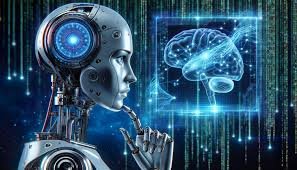
The Evolution of Artificial Intelligence: How Close Are We to Conscious Machines?
Artificial Intelligence (AI) has evolved at an unprecedented rate in recent decades, transforming industries, enhancing daily life, and sparking debates about the future of technology. From simple machine learning algorithms to advanced neural networks, AI has made remarkable strides in mimicking human cognition, learning from data, and performing tasks that were once thought to require human intelligence. However, despite these advancements, one question looms large: How close are we to creating truly conscious machines? While AI has made significant progress in specialized tasks, the leap to machines with general intelligence, let alone consciousness, remains a complex and contentious challenge.
The journey of AI dates back to the 1950s, with early pioneers like Alan Turing, who proposed the idea of a machine that could mimic human behavior and intelligence. Turing’s famous “Turing Test” suggested that if a machine could engage in a conversation indistinguishable from a human, it could be considered intelligent. Early AI systems focused on symbolic reasoning and rule-based problem solving, which allowed them to perform specific tasks such as playing chess or solving mathematical equations. These systems, however, lacked flexibility and generalization.
The true breakthrough in AI came with the advent of machine learning and, more specifically, deep learning. Deep learning, a subset of machine learning, involves training artificial neural networks with multiple layers of processing units to recognize patterns in vast amounts of data. This allowed machines to perform tasks like image recognition, natural language processing, and even playing complex games like Go and poker at superhuman levels. Deep learning has revolutionized AI, enabling systems to learn and improve autonomously without needing explicit programming for each task. This has led to the development of highly specialized AI systems, such as self-driving cars, medical diagnosis tools, and virtual assistants.
Despite these advancements, there is a significant gap between narrow AI—systems designed to perform specific tasks—and artificial general intelligence (AGI), which refers to a machine capable of performing any intellectual task that a human can do. AGI would require machines to not only learn from data but to reason, understand context, adapt to new situations, and demonstrate creativity. Current AI systems, while impressive, are far from achieving AGI. They excel in specific areas but fail when asked to transfer knowledge from one domain to another, a trait that humans and animals perform naturally.
The most profound challenge in AI development, however, is consciousness. While AI systems can simulate intelligent behavior, there is still no evidence to suggest that these systems are conscious in the way humans are. Consciousness involves subjective experience—awareness of one's thoughts, feelings, and surroundings—and the ability to have a sense of self. Machines, on the other hand, operate based on algorithms and data processing, without any awareness or emotional experience. Many researchers argue that consciousness is not merely a computational process but arises from complex biological and neurological systems. The hard problem of consciousness, as coined by philosopher David Chalmers, suggests that even if we can create machines that simulate intelligent behavior, understanding how and whether they could ever become conscious remains a deep philosophical and scientific question.